“Movement is a medicine for creating change in a person’s physical, emotional, and mental states.
— Carol Welch
Some workouts build strength, some build stamina—but Zumba does something different for me. It builds joy. I still run, I still lift, I still push myself in the gym, but Zumba holds a special place in my routine because of what it does for my mind. It feels like therapy, a way to recharge mentally while also moving my body.
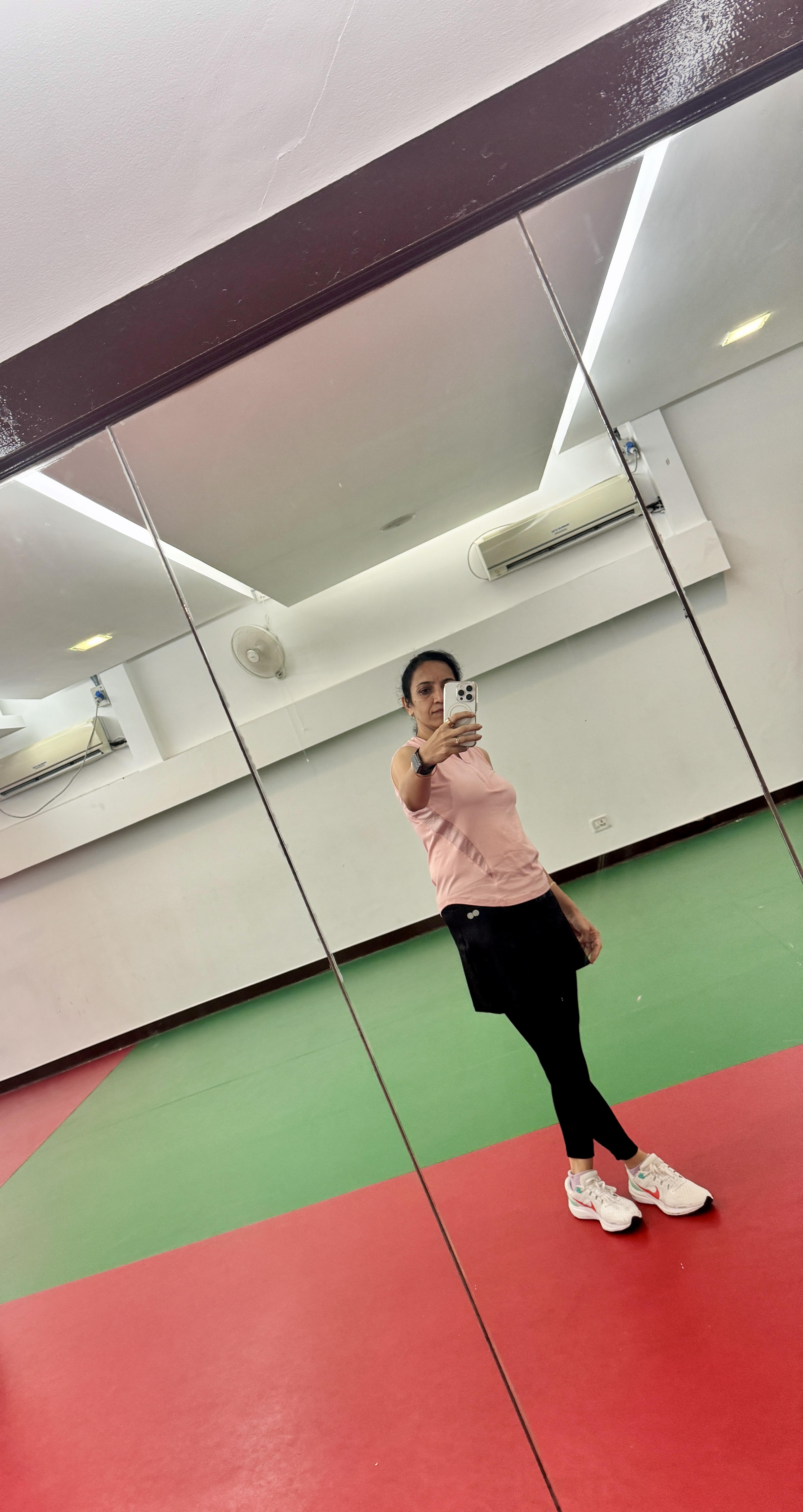
My Hesitant Beginning I still remember the very first day I walked into a Zumba class. I was hesitant, almost awkward. Everyone seemed to know the rhythm, and there I was, standing at the back, trying hard to match the trainer’s leg movements. My body felt stiff, my brain was overloaded with “left or right,” and I thought to myself, maybe this isn’t for me. But then something changed. My trainer @coachshikhasingh noticed my struggle—not in a judgemental way, but in a way that made me feel safe. She didn’t expect perfection. Instead, she gave me the space to move at my own pace. Her energy said: it’s okay if you miss a step, just keep moving. That moment was huge for me. It was the beginning of letting go of fear and simply enjoying the process. I laughed at myself so many times during those initial classes —turning right when everyone went left, clapping a beat too late—but strangely, it didn’t feel like failure. It felt freeing. And honestly—even now, I sometimes forget the steps. But all I’ve learned from this incredible dance/fitness form is: smile, keep going, and pick up the next one. Once I got comfortable, the real magic started. My trainer didn’t let me stay in that comfort zone for long. Slowly, she began to challenge me—not just physically with tougher routines, but mentally too. She pushed me to let go of my self-consciousness, to move bigger, to trust my body. With every passing day, I could feel myself breaking barriers I didn’t even know existed. That’s the thing about Zumba—it doesn’t just move your body, it moves your mindset. Each session became less about “getting the steps right” (although my trainer wants perfection from all of us always

) and more about feeling the music, expressing myself, and surprising myself with what I could actually do. Music is another reason Zumba feels like therapy. No matter how tired or stressed I walk into class, the beats always lift me. That rhythm drowns out my overthinking and pulls me straight into the present. It’s not just background sound—it’s medicine for the mind. Zumba doesn’t replace my runs or my strength workouts—it complements them. Running gives me discipline, the gym gives me power, but Zumba gives me joy. It’s the session where I sweat without counting, where I move without pressure, and where exercise feels more like play. That balance keeps me consistent across all forms of fitness. When I dance, stress loosens its grip. My inner chatter slows down, my body feels lighter, and energy flows differently. After every class, I walk out calmer, more centered, and more alive. Science calls it endorphins; I call it freedom. That’s why I call Zumba therapy—it heals me in ways weights and miles on the treadmill never could. And the best part? Even on days when my legs feel heavy, the moment the music kicks in, it feels like my worries are left at the door. There’s also something incredibly healing about the community around Zumba. On days I had zero motivation, I still showed up because I knew the positive energy of the group would carry me. Their smiles, their energy, their encouragement—it’s impossible to feel alone in that space.
My Takeaway is, Zumba isn’t an “alternative” to the gym—it’s a therapy session built into my training routine. It balances discipline with joy, structure with freedom. It’s where I learned that even when I doubt myself, I can move through that doubt—literally. Zumba taught me that showing up is enough, that progress is built step by step, and that sometimes, the best way to heal your mind is to let your body dance. If there’s one thing my Zumba journey has taught me, it’s this: you don’t need to be perfect to start, you just need to start. Whether it’s Zumba, running, or even a simple walk—movement heals. Find the kind that makes you feel alive, the one that makes you forget you’re “working out.” Because at the end of the day, fitness isn’t only about building a stronger body—it’s about building a happier, lighter mind.
 My Style Sprint
Amazing article. Feels like I also need to start Zumba soon.
LikeLiked by 1 person